
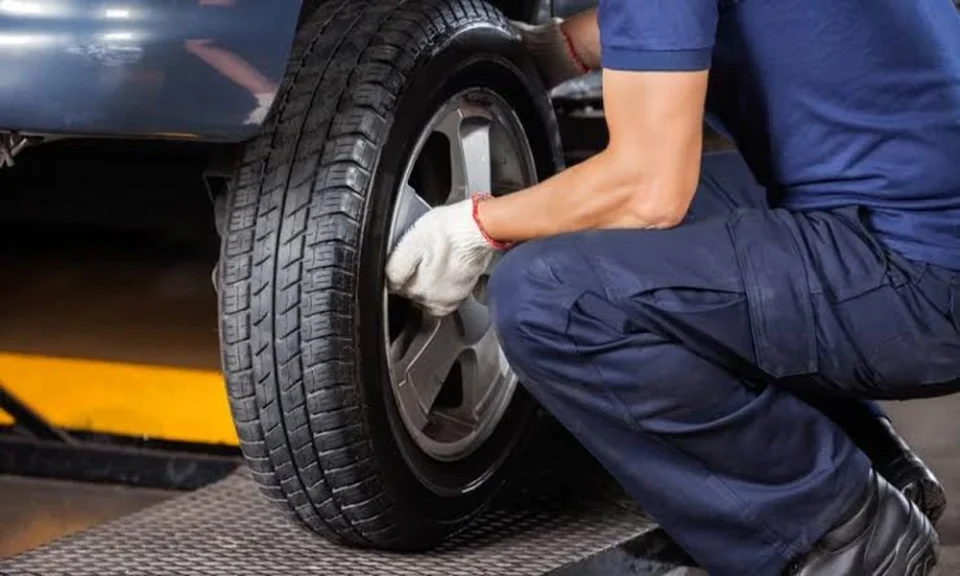
If your car has already appeared in a filmed scene, do not assume its wheels can be refinished before the remaining shots. A new appearance might be welcome in ordinary ownership yet fail to match footage already recorded. Find out which shots still depend on the earlier appearance, let the production resolve that continuity requirement, and plan personal cosmetic changes around its actual release.
Imagine a Toronto owner lending a silver-wheeled car for a small production. The wide shot shows someone arriving and stopping outside a building. Another day is reserved for a close view of the same arrival. Between those days, the owner wants the wheels renewed in a dark finish. The problem is specific: the editor may need two pictures of one fictional moment, while the real car has changed.
The first filmed appearance has become a reference
Once footage exists, the reference is no longer simply how the owner remembers the car. It is what the relevant footage actually shows. The original wide shot may reveal the colour of the wheels, their contrast with the body, or a distinctive visible mark. A clean photograph taken later can be helpful, but it cannot replace the filmed material when deciding what the next shot must match.
This does not mean every detail of every car must remain untouched indefinitely. It means someone responsible for the production needs to decide which details matter to the planned edit. An owner should not make that judgement from the phrase “just a closeup.” A close view of a door could contain part of a wheel, while a wider alternative might show a different side of the car.
ScreenSkills’ script-supervisor skills guidance includes recording prop details affecting continuity and consulting existing notes and dailies when completing partially filmed scenes. That provides the professional context for the question. Applying it to this hypothetical car means bringing the proposed finish change to the production’s continuity discussion, rather than asking the refinisher to decide what an editor can hide.
Describe the intended change plainly. “The wheels will be darker” is useful information; “they will just look better” hides the relevant difference. If the plan includes removing visible wear or changing sheen, mention that too. The production can then compare the proposed appearance with actual coverage instead of learning about it when the car returns to set.
Find the wheel in the coverage still needed
Ask the production contact to establish what remains to be filmed. In the arrival example, a shot of the front wheel stopping beside the curb makes the finish an obvious continuity detail. A shot filmed entirely inside the car may raise a different question. The owner does not need access to every production document; a clear answer about the car’s required appearance is enough to plan its care.
The car’s two sides also deserve attention. It would be easy to say that the original shot showed only one side and therefore change the other wheels. But the later camera position, reflections, or another planned angle may expose them. Do not commission a partial visual workaround based on your own reading of a still image. Let the people responsible for coverage explain the actual constraint.
Keep the car available for that conversation in the condition it actually has. If a wheel develops damage or another concern between shoot days, report it promptly and obtain appropriate vehicle advice. Continuity is a visual production requirement, not permission to preserve an unsafe component or keep driving for the sake of a shot. The production may need to change its plan when necessary work changes the car.
There is a difference between describing an existing cosmetic mark and recreating it after refinishing. Do not assume that a fresh finish can be made to reproduce an earlier worn surface exactly. That could introduce a second project without achieving the match. Before changing the original reference, establish whether the production still needs it and what alternatives it is prepared to use.
Let the production choose between matching and a deliberate change
One practical outcome is to leave elective refinishing until the matching shots are complete. Another is for the production to decide that the new appearance is acceptable because the relevant earlier material will not be used, or because a different shot plan avoids the mismatch. Those are production choices with consequences for its footage. They should not be inferred from an owner’s hope that nobody will notice.
Make the decision cover the actual change and the actual shoot interval. A general comment that the car is finished for the week does not answer whether it will be needed again for the same scene. Ask whether the matching requirement is released, remains in place, or is unresolved. That small clarification prevents a cosmetic appointment from becoming an accidental edit decision.
If the production elects to film the changed car, it should know when the transformation will occur and what appearance is expected afterwards. The owner can communicate the confirmed work plan without promising a workshop result or completion date that has not been established. Any new production requirement must still be realistic for the vehicle and the work being considered.
Release the car from continuity before its personal makeover
“Now I want the dark wheels I would have chosen for myself.” With the final matching shot completed and the old appearance released, that preference can finally govern the personal project. The owner chooses wheel refinishing in Toronto from Onyx Rims, subject to assessment of the wheels. The intended transformation no longer has to imitate silver wheels in earlier footage.
The refinisher still needs to assess the current wheels and explain the available result. The owner may choose a restrained dark finish for everyday use, reconsider its sheen, or decide that renewed silver remains more appealing. Those choices can now follow personal taste and the actual assessment. They no longer need to preserve a detail for an insert shot that has yet to be filmed.
The satisfying endpoint is precise: the close view and the earlier arrival can still belong to the same scene, and the owner is free to enjoy a later makeover. A dated filming commitment has been completed before a personal appearance change begins. The wheels do not need to remain frozen in a fictional moment once the production has genuinely finished using that moment.
