
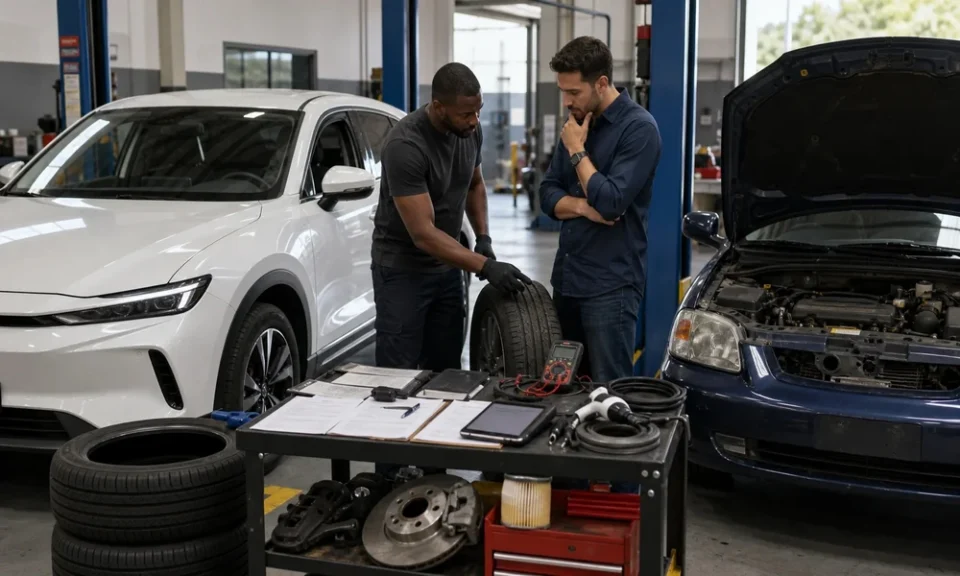
In many African and Latin American markets, the real comparison is not new versus used. It is a five-year budget question. A used Japanese import may offer familiarity, known parts channels, and a lower purchase price. A new Chinese EV may offer modern equipment, lower daily energy cost, and fewer traditional engine-service items. The winner depends on the buyer’s use case.
The Cost Stack
Dealers can make the conversation clearer by building a simple cost stack. At the top is the purchase or landed price. Below that come energy cost, maintenance, insurance, charging setup, downtime, parts access, and resale assumption. None of these items should be treated as fixed across markets. Fuel price, electricity tariffs, road quality, and service availability all need current local inputs.
For dealers building several comparison frameworks, the Starvia automotive blog is a useful general resource for EV sourcing, market readiness, and running-cost topics.
| Cost question | Used Japanese import | New Chinese EV |
| Upfront cost | Often easier to accept | May need stronger financing or value explanation |
| Daily energy | Fuel cost depends on local pump prices | Charging cost depends on home, depot, or public access |
| Service habit | Familiar to many workshops | Needs EV-aware inspection and support |
| Buyer confidence | Strong in mature used markets | Stronger when charging and warranty are explained |
| Suitable use | Long routes, low charging access, familiar repair needs | Urban routes, home/depot charging, high fuel-cost use |
The table is not a verdict. It is a way to stop the discussion from becoming emotional. Buyers who drive long rural routes and rely on broad mechanical familiarity may still fit a used Japanese import. Buyers who run predictable urban kilometres and can charge reliably may find the EV case more attractive over time.
Maintenance deserves careful wording. EVs remove oil changes and some engine-related service, but they still need tires, suspension, brakes, software checks, charging-port care, and battery-health monitoring. Used imports may be familiar, but age and mileage can bring their own repair risk. A fair dealer explains both sides without trying to force the buyer into one category.
Resale should also be handled with caution. Some Japanese used models have long-standing resale confidence. Chinese EV resale patterns may depend on brand awareness, battery documentation, service support, and local charging adoption. A dealer can discuss possible resale ranges, but should avoid presenting a single future value as fixed.
How the Same Table Changes by Buyer
The conversation changes again for commercial buyers. A private owner may focus on purchase price and resale, while a ride-hailing driver may care more about weekly energy spending and uptime. A delivery business may value depot charging and route predictability. A rural buyer may still prefer a known used fuel vehicle because service access matters more than cabin technology. These buyer differences should shape the comparison before any recommendation is made.
Dealers can also use the five-year framework to protect themselves. If a customer later complains that an EV did not save money, the dealer can point back to the assumptions discussed before purchase: route, charging access, electricity cost, maintenance, and current local fuel price. Transparent assumptions are better than loose sales claims.
The framework also helps with inventory. If most local buyers lack reliable charging, the dealer may hold fewer full EVs and focus on efficient fuel or hybrid options. If commercial buyers have depot charging and high mileage, EV stock may deserve more space. The point is to let the local operating case drive the sourcing plan, not the other way around.
The strongest five-year comparison is buyer-specific. It should use current fuel and electricity costs, actual route patterns, charging availability, and realistic maintenance assumptions. For further reading on the Chinese EV vs used Japanese import decision, Starvia’s related article examines the running-cost math in more detail.
