
Upgrading to aftermarket wheels is a popular way to customize a vehicle’s appearance and enhance its performance. However, before making the switch, it’s important to consider how aftermarket wheels can affect not only the look of your car but also its overall driving dynamics and fuel efficiency.
Aftermarket wheels come in various sizes, materials, and designs, each impacting performance in different ways. Larger, heavier wheels can improve handling and cornering by providing a wider contact patch with the road. However, they also add unsprung weight, which can make your car slower to accelerate and harder to brake. This extra weight often leads to reduced fuel efficiency, as the engine must work harder to move the heavier wheels.
On the other hand, lightweight aftermarket wheels made from materials like aluminum or carbon fiber can enhance acceleration and braking, potentially improving both performance and fuel economy. The reduction in rotational mass means less strain on the engine, resulting in smoother handling and better mileage.
The effect of aftermarket wheels on mileage and performance depends largely on their size, weight, and material. It’s essential to strike the right balance between aesthetic upgrades and practical considerations to avoid negatively impacting your vehicle’s performance or fuel efficiency.
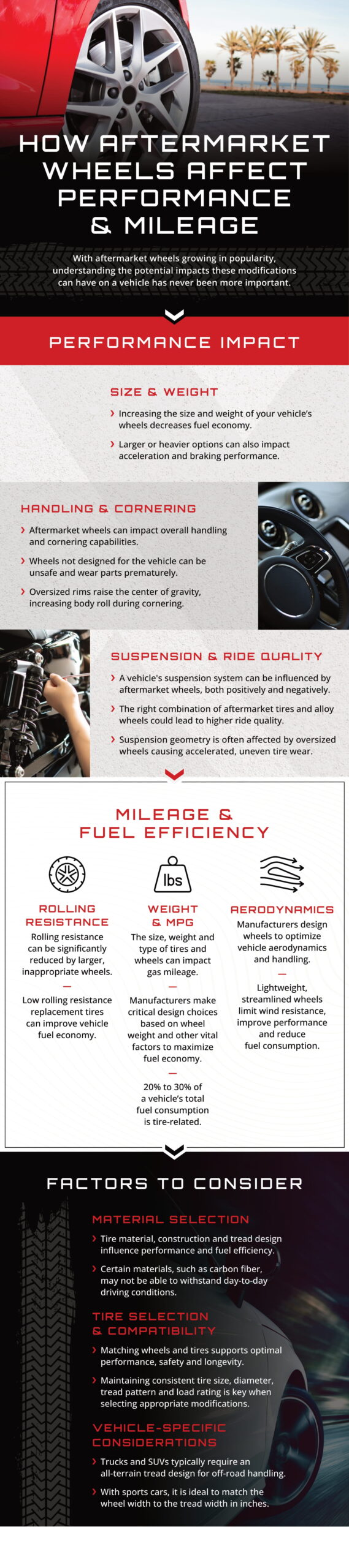
Infographic provided by Kixx Motorsports, a provider of f1r wheels for sale
